The weekend was spent at our parish conference at St Mark’s in Forest Hill. The conference topic was about discipleship and based on stories of King David in the Old Testament and what a flawed character he was.
Here was a man who was committed to his God, could write some of the most poetic and heartfelt psalms of worship and repentance and yet commit some of the most reviled, selfish acts for which human beings are infamous.
One of David’s key stories was his adulterous relationship with Bathsheba. While his men were away at war, he fell in lust with the curvaceous Bathsheba and knocked her up. Furthermore Bathsheba was married to one of the king’s exclusive guard and David, upon learning of her pregnancy, had this woman’s husband killed during battle.
Bathsheba then shacked up with David, became his wife and the child was born. The key verse however : “But the thing David had done displeased the Lord.” The Lord convicted David of his wrong doing, David repented, “David pleaded with God for the child. He fasted … and spent the nights lying on the ground,” but the child died, as a consequence of David’s sin.
Juxta-pose this experience in the morning with the final MIFF screening that afternoon : Sympathy for Lady Vengeance. Park Chan-wook’s third ‘revenge’ film started with Geum-ja, now 32, released from prison after 13 years, incarcerated for kidnapping and murdering a 5 year old child. In prison she became a model prisoner, converting to the Christian faith and serving other prisoners by caring for the elderly, feeding the sick and so forth.
Upon her release she is met by the pastor and a collection of sisterly parishioners to welcome her release. She is offered a block of tofu to eat (as it is coloured white) as a symbol of her transformation to a life that is pure, forgiven and free from the evils of her past. She looks the pastor in the eye, tips the tofu onto the ground and tells him to get out of her way. This is funny and tragic in equal measure. She has been plotting her revenge for 13 years and is now ready to put her plan into action.
The ‘good works’ she accomplished in prison created goodwill obligations in her fellow inmates (for example, in one she disposes of the cell bully creatively to the gratitude of those who were most put upon) whose favours she calls on in the outside world.
Known as “Kind Geum-ja” by those in prison whom she helps, an epithet she despises, she tracks down the child’s killer, the man for whom she went unjustly to prison and was forced as a result to give up her own child for adoption.
The play off between redemption and revenge looms large in this film as Geum-ja plots a course where she knows she may never reach the one and fail in her attempt of the other. She tracks down her own daughter who in turn does not understand why her mother put her up for adoption and who believes that any mother that would do such a thing should go to prison for it.
In the words of a very well known Catholic prayer, “it is in forgiving that we are forgiven.” No wonder Geum-ja is racked with her own guilt. She is asked at one point if she intends to kill again. Very matter of factly she replies, “once more.” How can you be forgiven if your sole purpose is revenge ? Has she condemned her soul as a result ?
Consider David again. David and Bathsheba bore another son whom they named Solomon. It is not only the same Solomon who was renown for his wisdom, but it is the blood line that continued through to Joseph many hundred years later, father of Jesus, whom God had promised to his people would be the fulfilment of his promises of redemption.
David’s repentance after the death of his first son led to one of the great psalms : “create in me a clean heart, O God; and renew a right spirit within me.” David’s serious and heartfelt repentance coupled with God’s willingness to forgive leads to the significant honouring of God’s contract with David through ultimately to the birth of Jesus. What does this say about a God so great and transcendent that his own purpose is accomplished and his own glory is revealed despite the flaws and failings of the people who serve him so imperfectly ?
Who then was Jesus and why is he important ? Jesus was more than just a Jewish prophet or desert renegade looking for his own collection of followers. Jesus was God’s son with the very specific task of reconciling mankind with God. Hitherto man had been permanently separated from God with the only means of becoming right with God via the very strict and impossible demands of the Jewish laws. The Christian message proclaims that acceptance of Jesus’ death as an exchange for your sinfulness (that is, your rejection of God) leads to reconciliation with God and eternal life.
And so, does Geum-ja find her redemption ? Geum-ja knows about absolution – that need to make right wrong things that have happened. Guem-ja styles herself as an avenging angel but has not redeemed herself in the process. Is she God that she can make judgements about death and life ? (I know and understand that justice in the context of a movie is a step removed from real life which is just how we like it).
As the snow falls, Geum-ja’s daughter try to catch snow flakes in her mouth as it falls. With her tongue out, is she receiving the sacrament of Jesus (the breaking of bread in a Holy Communion service) as it falls from heaven ? Geum-ja minus her vengeanful-coloured, red eye shadow, clothed in her white dress, plunges her head, face first into a white chocolate cake where it stays until the credits role. Symbolism ? You bet. Perhaps she has found peace at last.

Showing posts with label MIFF06. Show all posts
Showing posts with label MIFF06. Show all posts
Wednesday, 16 August 2006

Monday, 14 August 2006
MIFF coming to a close
MIFF2006 is over and I enjoyed my experience. After two weeks I fitted in 12 screenings which in truth was about all I could have fitted in given all other commitments I have to make. That is not say that given time there weren’t another dozen films I would have liked to have viewed. The retrospective on the Iranian director would have been interesting and the Danish section would likewise have been confronting.
[sorry, can't upload any pictures at the moment - check back for more Dilbert/Vijay comic strips at another time]
I was glad to have the company of Vijay for 3 of the screenings, the last of which was The Wind that Shakes the Barley, Cannes winner and typical of Irish stories, no happy ending (but a well made period piece nonetheless).
The three Australian movies that I saw were all excellent and should enjoy a cinematic release. The Book of Revelation was the most confronting and has been written on at length already.
The Last Train to Freo was a low budget affair by first time director Jeremy Sims (yes, him of the bad adult soapies of the early 90s). The action takes place in real time as the last suburban train of the night travels from Midlands in Perth down to Fremantle with the action never leaving the confines of the carriage. Very similar in concept to Breakfast Club where a group of strangers find themselves lumped together and make discoveries about themselves and each other they hadn’t expected. While the script became a little contrived this did not ultimately detract from the powerful acting of the unknown cast of 5. Steve Le Marquand, known only as The Large Thug, is at times menancing and charming and around whom the whole drama hangs.
Like Minds is directed by Australian Gregory Read but is set in an English boarding school. It stars well known Australians Toni Collette as a child criminal psychologist and Richard Roxburgh as the lead detective, both sporting horrendous English accents. The real star is 24 year old Englishman Eddie Redmayne, the subject of our Australian duo in an ongoing investigation.
The director’s premise is twofold : where do sociopaths start from and what happens when you place two of them together to work off each other. What transpires is a number of deaths (no kidding, right ?), plenty of mythology about the Knights Templar to keep The Da Vinci Code honest and some gruesome discoveries. It is very much in the same vein as David Fincher’s Se7en or Primal Fear. Very well made and should enjoy a strong cinematic release. Highly recommended.
[sorry, can't upload any pictures at the moment - check back for more Dilbert/Vijay comic strips at another time]
I was glad to have the company of Vijay for 3 of the screenings, the last of which was The Wind that Shakes the Barley, Cannes winner and typical of Irish stories, no happy ending (but a well made period piece nonetheless).
The three Australian movies that I saw were all excellent and should enjoy a cinematic release. The Book of Revelation was the most confronting and has been written on at length already.
The Last Train to Freo was a low budget affair by first time director Jeremy Sims (yes, him of the bad adult soapies of the early 90s). The action takes place in real time as the last suburban train of the night travels from Midlands in Perth down to Fremantle with the action never leaving the confines of the carriage. Very similar in concept to Breakfast Club where a group of strangers find themselves lumped together and make discoveries about themselves and each other they hadn’t expected. While the script became a little contrived this did not ultimately detract from the powerful acting of the unknown cast of 5. Steve Le Marquand, known only as The Large Thug, is at times menancing and charming and around whom the whole drama hangs.
Like Minds is directed by Australian Gregory Read but is set in an English boarding school. It stars well known Australians Toni Collette as a child criminal psychologist and Richard Roxburgh as the lead detective, both sporting horrendous English accents. The real star is 24 year old Englishman Eddie Redmayne, the subject of our Australian duo in an ongoing investigation.
The director’s premise is twofold : where do sociopaths start from and what happens when you place two of them together to work off each other. What transpires is a number of deaths (no kidding, right ?), plenty of mythology about the Knights Templar to keep The Da Vinci Code honest and some gruesome discoveries. It is very much in the same vein as David Fincher’s Se7en or Primal Fear. Very well made and should enjoy a strong cinematic release. Highly recommended.
Wednesday, 9 August 2006
Three Times - MIFF06
A new candidate for ‘worst festival experience’. Coupled with a theatre that was over heated made the TWO HOURS TWENTY MINUTES seem much, much, much longer. What makes the disappointment worse is that before MIFF commenced this year, this was second on my list of films I really wanted to see.
Reviewed fairly accurately and with a simmilar experience to mine, I have requoted US reviewer James Berardinelli instead of coming up with the same words myself (the capitalisation and bolding are mine to emphasise my point) :
Reviewed fairly accurately and with a simmilar experience to mine, I have requoted US reviewer James Berardinelli instead of coming up with the same words myself (the capitalisation and bolding are mine to emphasise my point) :
Three Times comes from the mind of Taiwanese director Hou Hsiao-hsien. Comprised of a trio of 45-minute shorts starring the same male and female leads (Shu Qi, Chang Chien), the mini-films look at romance in three different time periods: 1911, 1966, and 2005. The first segment, which transpires in 1966, has the leads meet in a pool hall then correspond by mail once he joins the army. When he's home on leave, he tracks her down so they can spend time together. The 1911 episode is a drama between a master and his favorite concubine. He has promised her freedom, but she is so important to him that he cannot bear to let her go. Finally, in 2005, the female character is an epileptic singer involved with another woman as well as the man. Eventually, she turns her back on the lesbian, but there is a price to pay. (It's important to note that although the same actors are used in each time period, the characters they play are not related.)
Three Times features minimal dialogue. It is mostly about mood and images, and it moves at a glacial pace. Hou is in no hurry to speed things along. He frequently holds shots, lingering for longer than a conventional director might. A SIDE ORDER OF A CAFFEINATED BEVERAGE IS RECOMMENDED. The middle segment is an homage to the silent era. Although in color, this part is designed like a pre-talkie movie, complete with intertitles. I don't claim to have enjoyed Three Times in a traditional sense. I appreciated its artistry and admired its intentions, but I found the characters to be unpleasantly cold, and the filmmaker's style to be distancing. This is the kind of film that would have benefited from the forging of an emotional bond between the audience and the protagonists.
Monday, 7 August 2006
Tideland and Election 2 - MIFF06
Where do you start with something like Terry Gilliam’s latest, Tideland ? Gilliam’s CV includes Time Bandits, Brazil, The Fisher King, Twelve Monkeys, Fear and Loathing in Las Vegas and last year’s The Brothers Grimm. Gilliam is clearly fascinated by the interplay between fantasy and reality with plenty of gruesome and grotesque imagery in between.
If you are a fan of Gilliam then you will want to see Tideland for yourself and will not be swayed by anything I say but I don’t recommend this film.
Tideland tells the story of Jeliza-Rose, a precocious 11 year old played by Jodelle Ferland (who has the unwitting honour of actually being 11 when she plays an 11 year old instead of the usual Hollywood conceit of playing older actors in younger roles). In truth, Ferland does an amazing job as she holds her performance as the central character for the whole two hours. She is either on screen or we hear her voice the whole time.
Alice in Wonderland is directly referenced a couple of times and often we are transported between reality (which is often grim and unpleasant) and Jeliza-Rose’s fantasy. She plays with four dismembered Barbie doll heads who each have distinct voices and personalities in Jeliza-Rose’s mind.
Both Jeliza-Rose’s parents die of drug overdoses early on in the film and she is left in the run-down family home in the middle of acres of a barren rural property, surrounded by overgrown, head-high grass on her own. Jeliza-Rose displays maturity beyond her years (she helps her father by preparing his heroin shots for him) and great naivety. Part of the terror of this film is that you are never sure if she is going to be blown up, shot, molested or just waste away from neglect and shock.
Her nearest neighbours are a strange woman dressed all in black (is she a ghost, Miss Haversham or something else entirely?) and this woman’s simpleton brother, played with great effect by Brendan Fletcher.
When all events around Jeliza-Rose are viewed through her skewed, fantasy perspective, “real-life” form part of her games and inner-narrative which only heightened my discomfort.
Tideland is a disturbing film to be sure and the apocalyptic ending helps explain some of it but unless I just don’t “get it,” not all of it.
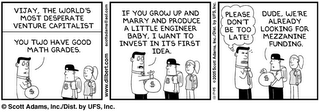
Good friend Vijay (no, not the world’s most desperate Venture Capitalist but a joke’s a joke) joined me in the Johnnie To sequel, Election 2 on Sunday night. Having watched Election (singular) Friday night courtesy of a courier service best not mentioned here as part of my research for this event, let’s just say that there are still no legal copies available in this country.
The election at the heart of both stories is that of the orderly transition every two years of a new chairman to head Hong Kong’s largest Triad. Similar in scope to the Mafia, the Triad’s services include protection fees and money laundering. Vijay and I had a small laugh to ourselves when the bundles of dollar bills covered in blood were in desperate need of laundering.
Neither films were the martial arts extravaganzas I was expecting such as an Ong Bak. Election was far more political in the manoeuvring between the key candidates and their backers with only two brief flurry’s of violence. Election 2 is far more visceral and brutal where the man with the greatest desire to win the chairmanship was the man prepared to do whatever it took to get there.
To sets a great tone in both films and the performances are refined and circumspect but still fit and strong in their roles as uber-cool, powerful gang leaders. Highly recommended if want an action flick (happy to lend a copy as either not available at Video Ezy !).
If you are a fan of Gilliam then you will want to see Tideland for yourself and will not be swayed by anything I say but I don’t recommend this film.
Tideland tells the story of Jeliza-Rose, a precocious 11 year old played by Jodelle Ferland (who has the unwitting honour of actually being 11 when she plays an 11 year old instead of the usual Hollywood conceit of playing older actors in younger roles). In truth, Ferland does an amazing job as she holds her performance as the central character for the whole two hours. She is either on screen or we hear her voice the whole time.
Alice in Wonderland is directly referenced a couple of times and often we are transported between reality (which is often grim and unpleasant) and Jeliza-Rose’s fantasy. She plays with four dismembered Barbie doll heads who each have distinct voices and personalities in Jeliza-Rose’s mind.
Both Jeliza-Rose’s parents die of drug overdoses early on in the film and she is left in the run-down family home in the middle of acres of a barren rural property, surrounded by overgrown, head-high grass on her own. Jeliza-Rose displays maturity beyond her years (she helps her father by preparing his heroin shots for him) and great naivety. Part of the terror of this film is that you are never sure if she is going to be blown up, shot, molested or just waste away from neglect and shock.
Her nearest neighbours are a strange woman dressed all in black (is she a ghost, Miss Haversham or something else entirely?) and this woman’s simpleton brother, played with great effect by Brendan Fletcher.
When all events around Jeliza-Rose are viewed through her skewed, fantasy perspective, “real-life” form part of her games and inner-narrative which only heightened my discomfort.
Tideland is a disturbing film to be sure and the apocalyptic ending helps explain some of it but unless I just don’t “get it,” not all of it.
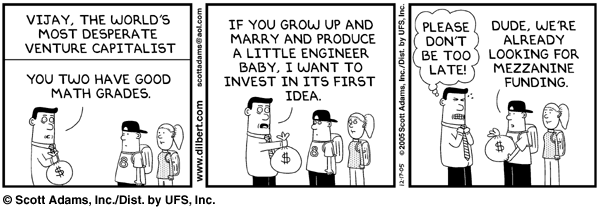
Good friend Vijay (no, not the world’s most desperate Venture Capitalist but a joke’s a joke) joined me in the Johnnie To sequel, Election 2 on Sunday night. Having watched Election (singular) Friday night courtesy of a courier service best not mentioned here as part of my research for this event, let’s just say that there are still no legal copies available in this country.
The election at the heart of both stories is that of the orderly transition every two years of a new chairman to head Hong Kong’s largest Triad. Similar in scope to the Mafia, the Triad’s services include protection fees and money laundering. Vijay and I had a small laugh to ourselves when the bundles of dollar bills covered in blood were in desperate need of laundering.
Neither films were the martial arts extravaganzas I was expecting such as an Ong Bak. Election was far more political in the manoeuvring between the key candidates and their backers with only two brief flurry’s of violence. Election 2 is far more visceral and brutal where the man with the greatest desire to win the chairmanship was the man prepared to do whatever it took to get there.
To sets a great tone in both films and the performances are refined and circumspect but still fit and strong in their roles as uber-cool, powerful gang leaders. Highly recommended if want an action flick (happy to lend a copy as either not available at Video Ezy !).
Thursday, 3 August 2006
Thursday MIFF docos
Thursday’s MIFF program included My Country, My Country, a documentary that followed Sunni doctor, Dr Riyadh in the build up to the 2005 Iraqi elections. Dr Riyadh runs for a place in the new government and the film shows him to be a compassionate, clear headed and even tempered man. We see him in his practice doing GP type stuff : sore throats, stiff necks, issuing prescriptions and on one occasion giving money to a woman so that she can feed her family as her husband had run off to fight with guerillas and provided no income. We see the doctor down at Abu Ghraib prison speaking with men and boys from beyond the razor wire, taking down their particulars before making an appointment to speak to the American military on their behalf.
With Fallujah sequestered at the time of the election and bombs falling all around the city, many Sunni’s do not vote on election day and Dr Riyadh scores a paltry 21,000 votes (compared with the millions of votes recorded elsewhere). He does not go to vote himself, disappointed and disgusted with the turn of events in his country.
A small highlight of the film is his wife and teenage daughters who do go to vote and come back brandishing their inked fingers with cheeky remarks like, “You have to pay others to vote for you but we voted for you for free !” There is a sense that Iraqis are proud of having been able to vote in a fair election but the number killed in the ongoing violence is over 100,000 with no likelihood of it stopping soon.
The Nine Lives of Korean Cinema was a French documentary that covered the renaissance of Korean film, both North and South since the Japanese tried to wipe out Korean culture during their occupation between 1905 to 1945. While both Koreas are fairly conservative countries with censors influencing very heavily what could and could not be shown, South Korea has relaxed its rules in the last 10 to 15 years and this has produced a current crop of filmmakers whose work I enjoy, for example, Kim Ki-duk (3-Iron, Spring, Summer, Autumn , Winter, … and Spring) and Park Chan-wook (Old Boy, Sympathy for Lady Vengeance : next week at MIFF).
----------------------------------------
Referring as I was to Kim Ki-duk, Margaret and David reviewed this week 3-Iron which is gaining a cinematic release in Australia. I saw this film at MIFF 12 months ago and would not have hesitated in awarding it 5 stars. It is a wonderfully tender love story, some bursts of violence and very little dialogue (and absolutely none from the main actor).
With Fallujah sequestered at the time of the election and bombs falling all around the city, many Sunni’s do not vote on election day and Dr Riyadh scores a paltry 21,000 votes (compared with the millions of votes recorded elsewhere). He does not go to vote himself, disappointed and disgusted with the turn of events in his country.
A small highlight of the film is his wife and teenage daughters who do go to vote and come back brandishing their inked fingers with cheeky remarks like, “You have to pay others to vote for you but we voted for you for free !” There is a sense that Iraqis are proud of having been able to vote in a fair election but the number killed in the ongoing violence is over 100,000 with no likelihood of it stopping soon.
The Nine Lives of Korean Cinema was a French documentary that covered the renaissance of Korean film, both North and South since the Japanese tried to wipe out Korean culture during their occupation between 1905 to 1945. While both Koreas are fairly conservative countries with censors influencing very heavily what could and could not be shown, South Korea has relaxed its rules in the last 10 to 15 years and this has produced a current crop of filmmakers whose work I enjoy, for example, Kim Ki-duk (3-Iron, Spring, Summer, Autumn , Winter, … and Spring) and Park Chan-wook (Old Boy, Sympathy for Lady Vengeance : next week at MIFF).
----------------------------------------
Referring as I was to Kim Ki-duk, Margaret and David reviewed this week 3-Iron which is gaining a cinematic release in Australia. I saw this film at MIFF 12 months ago and would not have hesitated in awarding it 5 stars. It is a wonderfully tender love story, some bursts of violence and very little dialogue (and absolutely none from the main actor).
Wednesday, 2 August 2006
Short docos - MIFF06
On Wednesday at MIFF I attended two screenings during the day and was glad to make them at all! While power-napping on trains is not an infrequent occurrence for yours truly, ordinarily it is on the way home from the city and I am so familiar with the number of stops that I have always been awake by the time the train approaches mine. I won’t deny that there have been some close shaves but I have never yet failed to get off at the right time. This time, heading into the city on a stopping all stations train (usually I catch one that runs express) I drifted off to a deeper than usual nap (okay, make that a sleep then) and awoke just as the train was leaving Flinders Street, on its way back out to Richmond. Not only had I missed getting off when the train stopped, it had docked for some time and was heading back the way I came. Oh well. I made it back into the city safely and was only 5 or so minutes late from the start. Thankfully the Forum Theatre is only a short distance from Flinders Street station.
Bye Bye Berlusconi! is an Italian faux-documentary (a mockumentary if you will) and a film-within-a-film. The documentary is about a group of actors who oppose (now former) Italian PM, Silvio Berlusconi and make a film satirising the re-election attempt of their country’s leader. The terrorist cell in their film kidnap Berlusconi (played by actor Maurizio Antonini who really does look like Berlusconi and does a great job of being outraged) and then try him by popular opinion on the internet (he gets 90 years). A great line occurs after the terrorist playing defence counsel “dies” from choking on an apple, the judge tells Berlusconi that he can represent himself now, “it was good enough for Milosevic,” thereby equating the democratically elected prime minister with the Yugoslav fascist dictator.
This was an amusing tale that says as much about free speech as it does about the film-makers politics. There was obviously a high proportion of Italians in the audience who understood the subtlety of Berlusconi and Italian politics because they laughed a whole lot more than I did during the film, and not just because I missed the set-up of the first five minutes !
The second screening was the most fascinating : a collection of 8 documentary shorts ranging in time from 7 minutes up to 26 minutes. Two in particular were worthy of note. The first, Spitfire 944, told the tale of an American man who, upon his grandfather’s death, came across a treasure trove of WW2 16mm film footage shot by his grandfather while he served in the American air force as chief surgeon.
The filmmaker transferred the 16mm film to modern digital format with the most startling piece of footage in the collection, the crash landing of a Spitfire in an English paddock followed by a young pilot with a very sheepish and relieved look on his face. The documentarian tracked down this pilot by cross-referencing the plane number with military records and then asked the man, now 83 years old, if he would assist them in the documentary they were making. The old service-man gave them some background to some of their questions before they showed him the footage of the plane crash which up until that moment he did not realise that they had. He flew Spitfires over many German cities, including Berlin, with cameras fixed in place of guns as an early form of reconnaissance. One half of the screen showed him while the other half of the screen showed the footage he was watching. This man was suddenly transported back beyond 60 years. “There’s Jack. That’s Tom. This plane is a such-and-such.” He was then dumbstruck as he recognised his plane coming to land and watching it bounce off the turf with no landing gear down. As the documentary ended the old man was told that he could keep the DVD of this footage from another time and place so that he could show his kids. He said that they had heard the stories often enough but to actually be able to show it to them was more amazing than he could hope to believe. The power and emotion of the experience makes for potent cinema.
The other documentary, Veiled Ambition, was of a Melbourne, Muslim woman, Frida, a second generation Australian from Lebanese born parents, married to Sydney based builder, Albert. Frida is a driven, articulate young woman who wins some money in a radio contest and sets up her own shop in Sydney Road, Coburg with high ambitions of opening a chain of fashion shops around Australia. Her passion in particular is to provide fashionable dress options for Muslim women who, like her, wear the head scarf and maintain traditional Muslim customs. When her shop struggles after 6 months, she goes more mainstream, importing evening gowns from overseas and it is here that her business takes off. The appeal of this film is clearly the main character, Frida who is such a strong personality and credit must go to her husband Albert who, despite living in a different city and clearly wanting Frida to move up with him, still wants her to succeed on her own terms. The film more than touches on the racial and religious themes of Lebanese Muslims living in Australia with some perspectives from her mother and her parents in law too.
It does not matter whether the film type is documentary, fiction, animation, whatever. If the story is compelling and the characters real, then film has the power to relate, inspire and transform.
Bye Bye Berlusconi! is an Italian faux-documentary (a mockumentary if you will) and a film-within-a-film. The documentary is about a group of actors who oppose (now former) Italian PM, Silvio Berlusconi and make a film satirising the re-election attempt of their country’s leader. The terrorist cell in their film kidnap Berlusconi (played by actor Maurizio Antonini who really does look like Berlusconi and does a great job of being outraged) and then try him by popular opinion on the internet (he gets 90 years). A great line occurs after the terrorist playing defence counsel “dies” from choking on an apple, the judge tells Berlusconi that he can represent himself now, “it was good enough for Milosevic,” thereby equating the democratically elected prime minister with the Yugoslav fascist dictator.
This was an amusing tale that says as much about free speech as it does about the film-makers politics. There was obviously a high proportion of Italians in the audience who understood the subtlety of Berlusconi and Italian politics because they laughed a whole lot more than I did during the film, and not just because I missed the set-up of the first five minutes !
The second screening was the most fascinating : a collection of 8 documentary shorts ranging in time from 7 minutes up to 26 minutes. Two in particular were worthy of note. The first, Spitfire 944, told the tale of an American man who, upon his grandfather’s death, came across a treasure trove of WW2 16mm film footage shot by his grandfather while he served in the American air force as chief surgeon.
The filmmaker transferred the 16mm film to modern digital format with the most startling piece of footage in the collection, the crash landing of a Spitfire in an English paddock followed by a young pilot with a very sheepish and relieved look on his face. The documentarian tracked down this pilot by cross-referencing the plane number with military records and then asked the man, now 83 years old, if he would assist them in the documentary they were making. The old service-man gave them some background to some of their questions before they showed him the footage of the plane crash which up until that moment he did not realise that they had. He flew Spitfires over many German cities, including Berlin, with cameras fixed in place of guns as an early form of reconnaissance. One half of the screen showed him while the other half of the screen showed the footage he was watching. This man was suddenly transported back beyond 60 years. “There’s Jack. That’s Tom. This plane is a such-and-such.” He was then dumbstruck as he recognised his plane coming to land and watching it bounce off the turf with no landing gear down. As the documentary ended the old man was told that he could keep the DVD of this footage from another time and place so that he could show his kids. He said that they had heard the stories often enough but to actually be able to show it to them was more amazing than he could hope to believe. The power and emotion of the experience makes for potent cinema.
The other documentary, Veiled Ambition, was of a Melbourne, Muslim woman, Frida, a second generation Australian from Lebanese born parents, married to Sydney based builder, Albert. Frida is a driven, articulate young woman who wins some money in a radio contest and sets up her own shop in Sydney Road, Coburg with high ambitions of opening a chain of fashion shops around Australia. Her passion in particular is to provide fashionable dress options for Muslim women who, like her, wear the head scarf and maintain traditional Muslim customs. When her shop struggles after 6 months, she goes more mainstream, importing evening gowns from overseas and it is here that her business takes off. The appeal of this film is clearly the main character, Frida who is such a strong personality and credit must go to her husband Albert who, despite living in a different city and clearly wanting Frida to move up with him, still wants her to succeed on her own terms. The film more than touches on the racial and religious themes of Lebanese Muslims living in Australia with some perspectives from her mother and her parents in law too.
It does not matter whether the film type is documentary, fiction, animation, whatever. If the story is compelling and the characters real, then film has the power to relate, inspire and transform.
Sunday, 30 July 2006
The Book of Revelation - MIFF06
Director Ana Kokkinos must have a thing for strong male characters facing a crisis. The theme of 1998’s Head On is identity and lead actor Alex Dimitriades, a second generation Greek immigrant, struggles with his nationality, sexuality and life purpose.
In 2006’s The Book of Revelation, shown on Saturday night at MIFF, Tom Long (Sea Change, The Dish) copes with putting his life back together after being sexually abused.
The opening scene of The Book of Revelation is that of Tom Long’s character, Daniel, walking serenely, confidently and not a little arrogantly toward his warm up place in the dance hall, in the last practice before that night’s opening of their ballet, of which he and his girlfriend, are leads. Dance director, Isobel (Greta Scacchi) says of Daniel, “I chose you to be the lead.” We know by his look, by his movement, by his demeanor that he is the alpha male : at the peak of his art, sexuality and company. As a portent of things to come, Isobel tells Daniel at the end of that practice, “I want you to dance it with less ego.”
Daniel goes in search of cigarettes and in a back alley, in the middle of the day, is abducted by three hooded women. He is not seen or heard of again for 12 days. When he is thrown from the back of a van into a vacant block, far from the city, Kokkinos laces the premise with some gentle humour. What would be the first thing a typical man would do after being kidnapped for 12 days ? He buys a beer of course.
The fact that Daniel has been kidnapped, chained and sexually abused is not actually the point of the film even though it sets the stage, provides a lot of the action and will no doubt generate most of the discussion. The message of the film, as stated above, is how does someone deal with abuse ?
The fact that it is a man being abused by women is done only to highlight the message rather than it being a likely or possible scenario per se. It forces us to consider how we would react were it us or how we would relate to someone to whom it has happened. Is abuse, in any form, acceptable ? Is a man somehow complicit in the abuse if he has an erection ?
Daniel, post event, is unable and unwilling to enunciate what has happened. He tries to make a statement to the police but the blokey aspect of what happened makes it impossible to explain with appropriate gravity. He loses his confidence and sense of self and is unable to resume his dancing. He is told to “get over it” and is actually blamed for having run away and evading his responsibilities. He pursues women whom he thinks might have been perpetrators, trying to locate tattoos or birthmarks that will link these women with the ones behind the cloaks.
He meets a woman, Julie, on a train who is kind to him, played by Deborah Mailman. The fact that she is aboriginal is deliberate I think because it is clear that she could not possibly have been one of three captors who were indisputably white. I have always thought Mailman is a great actor but never, I confess, found her to be particularly beautiful. In this role at this time however she radiates for the short time she has on screen. She has such a vivacious face and joyous spirit that I am sure that when this is contrasted with the hidden faces of the selfish manipulators, she is as welcome to us as she is to Daniel.
While Daniel’s relationship with Julie reinvigorates him for a time even to the extent of inspiring him back into the dance studio, it can only buoy him for so long. Unless the trauma of his recent past is dealt with then it will gnaw at him always. While at a club with Julie he sees a woman that could be the leader of the trio of abusers. He attacks her in a bid to uncover her identity. She turns out not to have been one of the three. He is locked in a police room, a cop who has become a mate sits by his side and asks him to tell his story “from the beginning.” The last scene, in contrast to the first, is a man about to begin his life again. A man for whom a life changing event has occurred who is broken and ashamed. His clothes are torn and his hair matted with blood. We’ve been on quite a journey during this film.
In 2006’s The Book of Revelation, shown on Saturday night at MIFF, Tom Long (Sea Change, The Dish) copes with putting his life back together after being sexually abused.
The opening scene of The Book of Revelation is that of Tom Long’s character, Daniel, walking serenely, confidently and not a little arrogantly toward his warm up place in the dance hall, in the last practice before that night’s opening of their ballet, of which he and his girlfriend, are leads. Dance director, Isobel (Greta Scacchi) says of Daniel, “I chose you to be the lead.” We know by his look, by his movement, by his demeanor that he is the alpha male : at the peak of his art, sexuality and company. As a portent of things to come, Isobel tells Daniel at the end of that practice, “I want you to dance it with less ego.”
Daniel goes in search of cigarettes and in a back alley, in the middle of the day, is abducted by three hooded women. He is not seen or heard of again for 12 days. When he is thrown from the back of a van into a vacant block, far from the city, Kokkinos laces the premise with some gentle humour. What would be the first thing a typical man would do after being kidnapped for 12 days ? He buys a beer of course.
The fact that Daniel has been kidnapped, chained and sexually abused is not actually the point of the film even though it sets the stage, provides a lot of the action and will no doubt generate most of the discussion. The message of the film, as stated above, is how does someone deal with abuse ?
The fact that it is a man being abused by women is done only to highlight the message rather than it being a likely or possible scenario per se. It forces us to consider how we would react were it us or how we would relate to someone to whom it has happened. Is abuse, in any form, acceptable ? Is a man somehow complicit in the abuse if he has an erection ?
Daniel, post event, is unable and unwilling to enunciate what has happened. He tries to make a statement to the police but the blokey aspect of what happened makes it impossible to explain with appropriate gravity. He loses his confidence and sense of self and is unable to resume his dancing. He is told to “get over it” and is actually blamed for having run away and evading his responsibilities. He pursues women whom he thinks might have been perpetrators, trying to locate tattoos or birthmarks that will link these women with the ones behind the cloaks.
He meets a woman, Julie, on a train who is kind to him, played by Deborah Mailman. The fact that she is aboriginal is deliberate I think because it is clear that she could not possibly have been one of three captors who were indisputably white. I have always thought Mailman is a great actor but never, I confess, found her to be particularly beautiful. In this role at this time however she radiates for the short time she has on screen. She has such a vivacious face and joyous spirit that I am sure that when this is contrasted with the hidden faces of the selfish manipulators, she is as welcome to us as she is to Daniel.
While Daniel’s relationship with Julie reinvigorates him for a time even to the extent of inspiring him back into the dance studio, it can only buoy him for so long. Unless the trauma of his recent past is dealt with then it will gnaw at him always. While at a club with Julie he sees a woman that could be the leader of the trio of abusers. He attacks her in a bid to uncover her identity. She turns out not to have been one of the three. He is locked in a police room, a cop who has become a mate sits by his side and asks him to tell his story “from the beginning.” The last scene, in contrast to the first, is a man about to begin his life again. A man for whom a life changing event has occurred who is broken and ashamed. His clothes are torn and his hair matted with blood. We’ve been on quite a journey during this film.
Tuesday, 25 July 2006
Melbourne International Film Festival
 This week, the Melbourne International Film Festival (MIFF) kicks off and my first screening is Saturday night : The Book of Revelation. It is one of the more prominent Australian premieres at this year’s festival, in much the same way that Look Both Ways was for MIFF last year.
If you’re thinking you might like to come along to a MIFF screening or two over the next couple of weeks then let me know. I have booked in a dozen or so sessions for myself, many of them at key times (eg, Friday or Saturday nights) and would welcome your company.
Next week will be difficult to post a regular GG entry as I am taking next Tuesday and Wednesday off from work to attend 4 MIFF screenings during the day and will be hard pressed to keep up with my paid responsibilities on the Thursday let alone to post additional comments here. Having said that I hope to post my MIFF reflections as I go so there should be something at any rate !
To access the MIFF site (to review the program and book tickets) you can click on the link on the border of this page.
Subscribe to:
Posts (Atom)